Sometimes on Sunday mornings my dad would send me to La Fama to buy a beer for lunch — a casco (the amber returnable bottle) of Superior. A couple of times I came back empty-handed because I lost the 50-peso bill (a small fortune back then) or I dropped the casco, the jar, the bottle — the bottle, I mean — while crossing the median, the one lined with palm trees near where we lived.
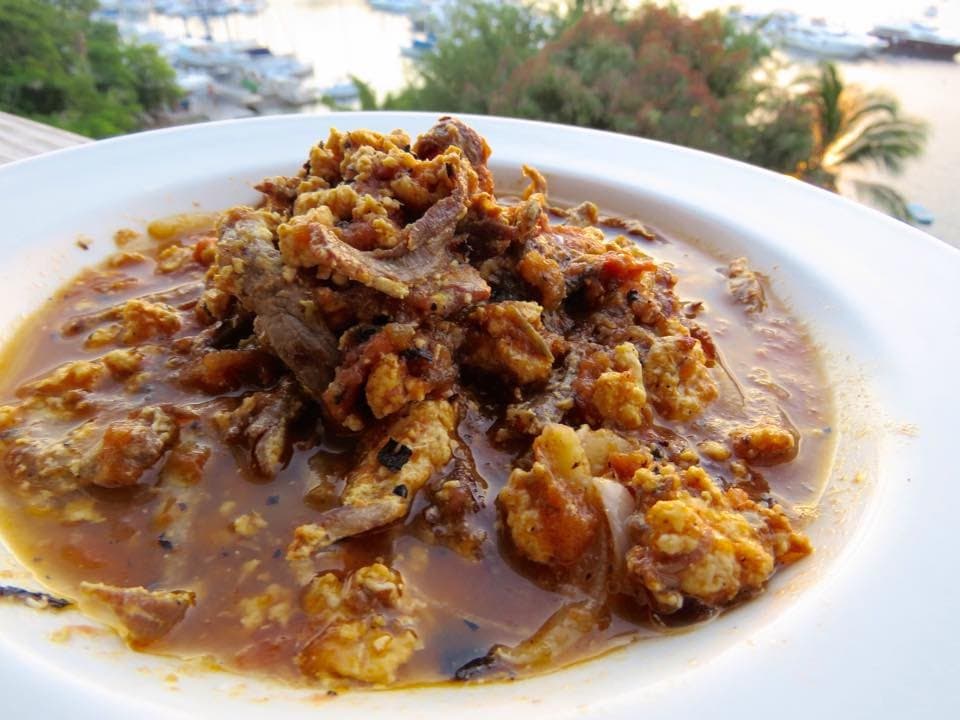
But that's not really what I want to talk about. I wanted to talk about something more important. On Sunday mornings, besides fighting with my brothers over the monitos — the comics supplement that came with El Universal — my greatest pleasure was tasting the aporreado my mother made for us. Aporreado is a stew from the state of Guerrero, from the Tierra Caliente, that stretch of land where our state borders Michoacán. My father, a proud native of Coyuca de Catalán, never let a Sunday morning go by without aporreado and a beer — which is, after all, the best way to wash that stew down your throat.
Aporreado, for those who don't know, is made with dried cecina or tasajo, as it may be called. My dad would dry the meat on top of the pantry, hanging the cecina from a rope. He'd leave the strips up there for several days until they were thoroughly dry, and once dry, they'd be cut into small pieces and browned in a skillet. Then my mother would add scrambled eggs and round out the recipe with a good, fiery salsa. So Sundays meant aporreado with warm tortillas, watching my father read the news in El Universal, and listening to him comment out loud to my mother about everything in it. Whether de Gaulle was coming to visit, whether the Kennedys would go to the Basílica, whether Díaz Ordaz was being groomed for the presidency — all those things.
And so aporreado brings back memories of my childhood at home — perhaps of the last times I felt we were truly a family, because after that, everything began to fall apart, starting in 1970.
Miguel Ángel Pérez Álvarez / CDMX