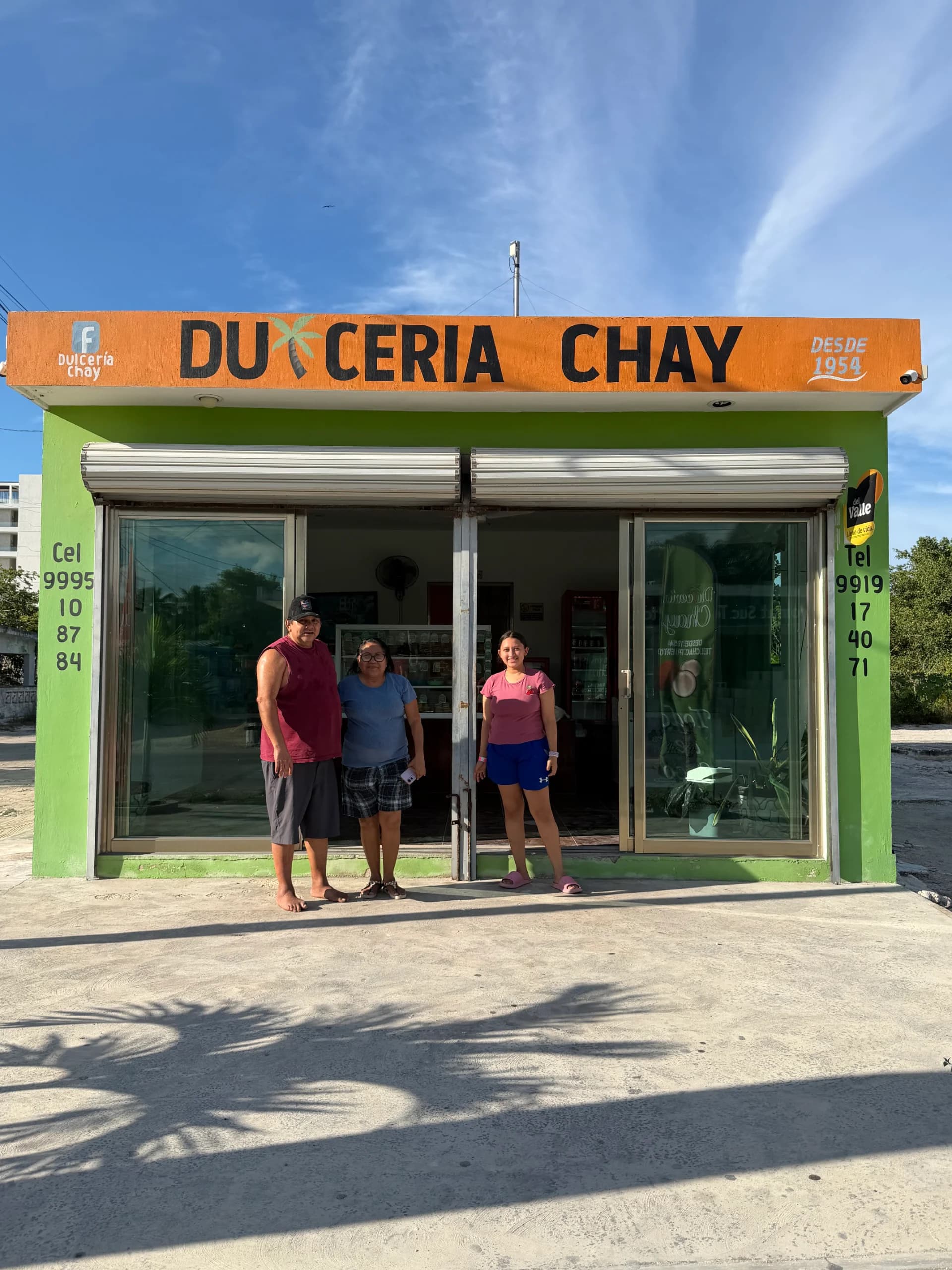
We are at Chay Candy Shop, famous for its traditional coconut candies.
This story began in 1954, when Doña Fermina Sansén began making candied papaya. At first, she made it with the peel, until she removed it and continued perfecting the recipe.
Francisco, his grandson, is the family’s third generation dedicated to making candy, and today they continue to produce these delicious traditional sweets from the region.
They began making stuffed limes and had success. The other sweets followed: coconut, pumpkin-seed, peanut and walnut pralines. The meringue cookies, the atropellado—all of them are natural and have always been made by hand. That has not changed, and they are still made the same way.
The tradition passed from Doña Fermina to her daughter Romana. Her husband, Don Renán, was a fisherman, but when fishing was not going as well, they began devoting themselves entirely to making candy. They prepared the sweets and set out on their tricycle to sell them near the beaches. They rented a stand from La Pino, which made soft drinks, chocolate soldiers and more.
They get the coconut in Telchac. It is dried coconut, which they process to turn into their delicious sweets. The coconut is scraped with a machine, and every part of it is used. Coconut milk is used to make the cremitas. The other sweets they make include coconut, pumpkin-seed, peanut and walnut pralines; negrito; sweet-and-sour tamarind; spicy salted tamarind; and coconut tortillas. Coconut atropellado, coconut balls, pumpkin-seed marzipan, coconut marzipan, lime stuffed with coconut, stuffed papaya, candied papaya, candied fig, coconut cookies with sprinkles, and dulce de leche.
The busiest selling days are on the weekend, and April is the month with the highest sales. Most people come from Motul, Telchac Pueblo and Telchac Puerto. They also come from Mérida and Progreso.
They have just built a kitchen so they can devote themselves fully to making coconut sweets. Francisco’s nieces and nephews are the fourth generation dedicated to making the candies.
They also make little coconut turnovers, sweet-potato-and-coconut turnovers, and little guava pastries. They also sell melcochas, which in the past were wrapped in sea-grape leaves. Coscorrones are made entirely of baked coconut. Today, they have some fresh from the oven.
Doña Romana continued her mother’s tradition, and in this way they kept making their sweets, which to this day are known and enjoyed by many generations. Doña Romana says that she was the one who began making the stuffed lime; no one had made papaya before her mother. Her husband suggested that she devote herself exclusively to making the sweets, and he would go out to sell them. They did very well; everyone would be waiting for them to buy their sweets.
She also says that during La Temporada (July and August), there was a line of cars placing their orders.
Back then there were no stoves, and all the sweets were made over firewood, making sure the flame did not go out. Today it is easier, thanks to kitchen technology. Her son and grandchildren continue the tradition. Nowadays they use a stove, an oven and everything is easier to make. In the past, everything was made at home, but later they built the industrial kitchen for the sweets, since demand is now very high.
Chay Candy Shop has had its own storefront since August 4, 2014, and has no other locations. If you visit Telchac Puerto, don’t miss a visit to Chay Candy Shop.
Thanks to Francisco Manuel Chay Cetina, Lupita Pech de Chay and Doña Romana Cetina Sansén for continuing and preserving this delicious tradition and sharing its story with us.
Genoveva De La Peña / CDMX