The Almond Pears with Rose Water
One recipe, three generations, and a love story that lives on.
Leon Faure AcraOctober 28, 20268 min read
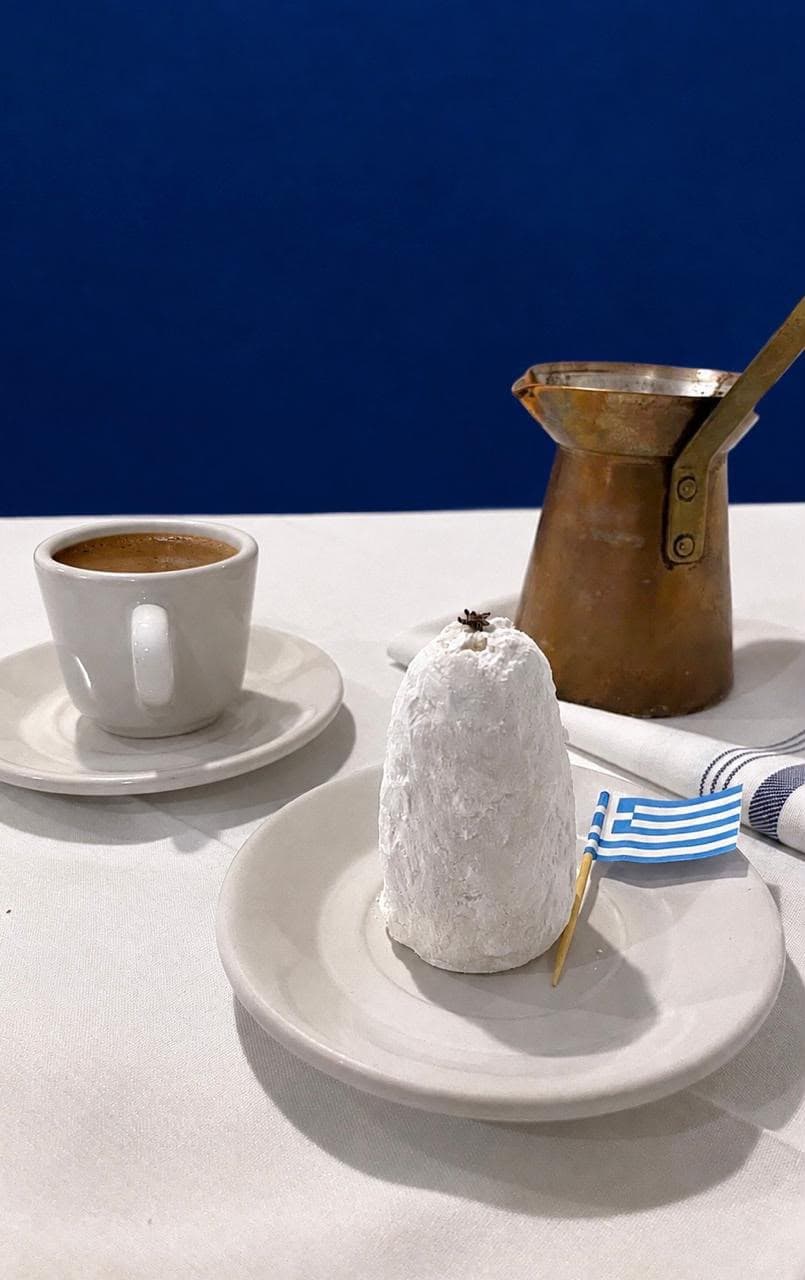
At Agapi Mu, my Greek restaurant, there’s a dessert that has been with us for nearly 35 years. They’re little almond pears scented with rose water, which we named Hydra pears. Anyone who has tried them is unlikely to forget them. But the story behind them has much more to do with love, family, and memory than with pastry itself.
It all began when I opened the restaurant, three and a half decades ago. That’s when I met Doña Carmen Torres, the mother of some wonderful kids who were completely in love with Greek culture. They danced, sang, played instruments, and one of them, Antonio, spoke perfect Greek. They were one of those families who come into your life and, without even trying, become part of your own story.
Doña Carmen offered to make the restaurant’s desserts. It was a godsend: I was focused on all the cooking, and she had magic hands when it came to sweets. We helped each other, and we worked happily together for years.
Among the delicacies she brought us were little almond pears with rose water. We loved them so much that we started calling them Hydra pears. They were an instant hit and stayed on the menu. There was no way we could take them off; people ordered them, recommended them, and came back just for them.
Eight or ten years went by until one day Doña Carmen told me quite frankly that she was tired and wanted to rest. She had learned many of those recipes from a Greek comadre, and it was time to stop. There was nothing to discuss: all that remained was to thank her from the bottom of our hearts for all those years and figure out how to carry on.
By then, my mother was already living with us, upstairs from the restaurant. She was of Lebanese descent and an extraordinary baker. All her life, she had made cakes, loaf cakes, cookies, and sweets because my father loved them. And many Arab and Greek desserts are deliciously related; so many preparations cross paths and embrace one another at the tables of both cultures.
So my mother said, “I’ll take care of the desserts.”
Everything seemed settled... until we got to the famous little pears.
She didn’t know how to make them! She couldn’t find anything like them in her repertoire. So she did something I still remember with a smile: she picked up the phone, called Doña Carmen, and asked her for the recipe.
The answer was unequivocal:
“No. That’s my recipe, and I’m not going to give it to you.”
And she had every right in the world. It was her creation, her work, something she had refined over many years.
But my mother wasn’t one to give up easily. If there was one thing she knew how to do, it was cook, and if there was one thing she had plenty of, it was curiosity and patience. She went into the kitchen to experiment, taste, mix ingredients, and try again and again until she got exactly the right result.
And she did it.
The little pears started coming out of the Agapi Mu kitchen again, with all their usual charm. My mother had found her own version, and from that moment on, they became part of her story, too.
Around that same time, something happened that still makes me smile. The Cypriot ambassador to Mexico was madly in love with our little pears. He liked them so much that whenever he hosted events at the embassy, he would order miniature pears from me to give to his guests as they left. He would greet them personally at the door, handing them that little delicacy as the final memento of the diplomatic reception. Just imagine!
And so they went on winning people over for a long time.
One day, returning from a trip to Mérida, I came across Aeroméxico’s monthly magazine. It was February, and there was a special feature on love and friendship, full of romantic recipes and dishes with a story. Our Agapi Mu pears were among them.
No one had told me or asked my permission. They had simply appeared in print, alongside creations from other famous restaurants. I was overjoyed. I bought about eight copies of the magazine and rushed to take them to my mother.
She was the proudest woman in the world, and rightly so! Those little pears, which she had had to figure out through patience and trial and error, were now in a national magazine. For her, after a lifetime spent looking after others through food, it was a beautiful recognition.
But life, as we know, doesn’t always let us enjoy things in peace.
Years later, my mother fell ill with cancer. Between chemotherapy treatments and gray days, there were times when she didn’t have the strength to cook. Still, as soon as she felt a little better, she would get back to work on the pears.
When the restaurant’s cooks saw her tired, they would kindly ask:
“Ma’am, would you like us to help?”
And she always said no. She’d feel better soon, she said; next week she would make them herself.
Sometimes she kept her promise and made a batch; other times, we had to wait. But the pears remained hers. They were her space, her pride, her way of staying connected to what she loved, even in the midst of illness.
My mother died, and with her passing, the recipe seemed to vanish once again.
People kept asking for them. Agustín, our manager—a genius with an extraordinary sense of humor—would make up any excuse he could to get out of it. He’d say she’d gone to a class, or was away on a trip... He always came up with some quip so he wouldn’t have to admit that the pears were no longer available.
And there was another curious detail: shortly before she died, a gentleman came to the restaurant to buy the recipe from her. She flatly refused. I kept telling her she could sell it, as long as we reserved the right to make them at Agapi Mu and he didn’t sell them himself. We even talked about numbers.
But she wouldn’t.
So when she was gone, we were left without a recipe. Or, rather, without my mother’s recipe, the one everyone knew and loved.
For quite a while, we observed something like a mourning period for the pears. But three years later, one day I said, “All right, that’s enough. Let’s break the spell. We have to make them again.”
And so began an extraordinary adventure. The cooks—and even some of the waiters—got into the kitchen. They tasted, mixed, adjusted, and tried again. We wanted to bring back the flavor so many people carried in their memories.
In the end, the one who got it just right was a waiter, a very clever young man who didn’t even work in the kitchen. By watching, tasting, and combining ingredients on pure instinct, he found the exact formula. We’d done it!
The Hydra pears returned to the Agapi Mu menu.
From then on, I gave a very clear instruction: write down the recipe and share it with the whole team. Everyone had to know how to make it. We couldn’t afford to lose it again. And if a customer asks us for it, we’re more than happy to share it.
Because, when you think about it, what’s the point of keeping a recipe under lock and key if the people who come after us can no longer enjoy it?
Today, when I see the little pears at the restaurant, I think of Doña Carmen, who first brought them to us; of my mother, who didn’t back down from the challenge and made them her own; of the Cypriot ambassador bidding farewell to his guests with one of them, and of that waiter who, without meaning to, gave us back a piece of our history.
I also think of all the hands that have made these little pears over the past 35 years, of those tasting them for the first time, and of those who come back asking for them.
Recipes have that kind of magic: you think you’re talking about almond flour, confectioners’ sugar, and rose water, but really, you’re talking about people. Someone who taught you something, someone who loved you, someone who’s no longer here, and someone who comes along later to carry the story on.
That’s why the Hydra pears are still here at Agapi Mu. They’re not just one of our favorite desserts: they’re our way of embracing the memory of my mother, thanking Doña Carmen, and celebrating all the good things that happen around a table when food is made with love.
And every time someone asks for them and takes a bite, I feel that my mother is still right about something, even though she’s no longer here to say it: some things are always worth making again and again.
And some recipes must be shared if they are to be saved from oblivion.
Leon Faure Acra / CDMX