I grew up in the neighborhood where the poet Octavio Paz was born. Its streets are named after painters, and I traveled them in a rush, on foot, on skates, on a bicycle. As happened when this place was a Tepanec settlement, once a week the street of my childhood filled with grain, fruit, and vegetable vendors, whom my grandmother visited as if she knew that labyrinth by heart. Milk, meanwhile, was delivered to the door, and at night the whistle of a street vendor selling sweet potatoes with honey would take me by surprise. That contraption battled for the soundscape with the night watchman’s whistle, a word that has been erased in a country of violence. Night had fallen, and my mother toasted bread that was always on the verge of burning. Then came the jam and butter. Along with the glasses of milk set out on a round table for six children, we called that pleasure merienda, another beautiful word fallen into disuse, derived from merecer (merere in Latin), to deserve a light meal after the day’s work. At that hour, we children were a hungry army, and my father would come home to prepare himself a plate of fresh cheese, salt, and olive oil. A merienda inherited from his Turkish mother.
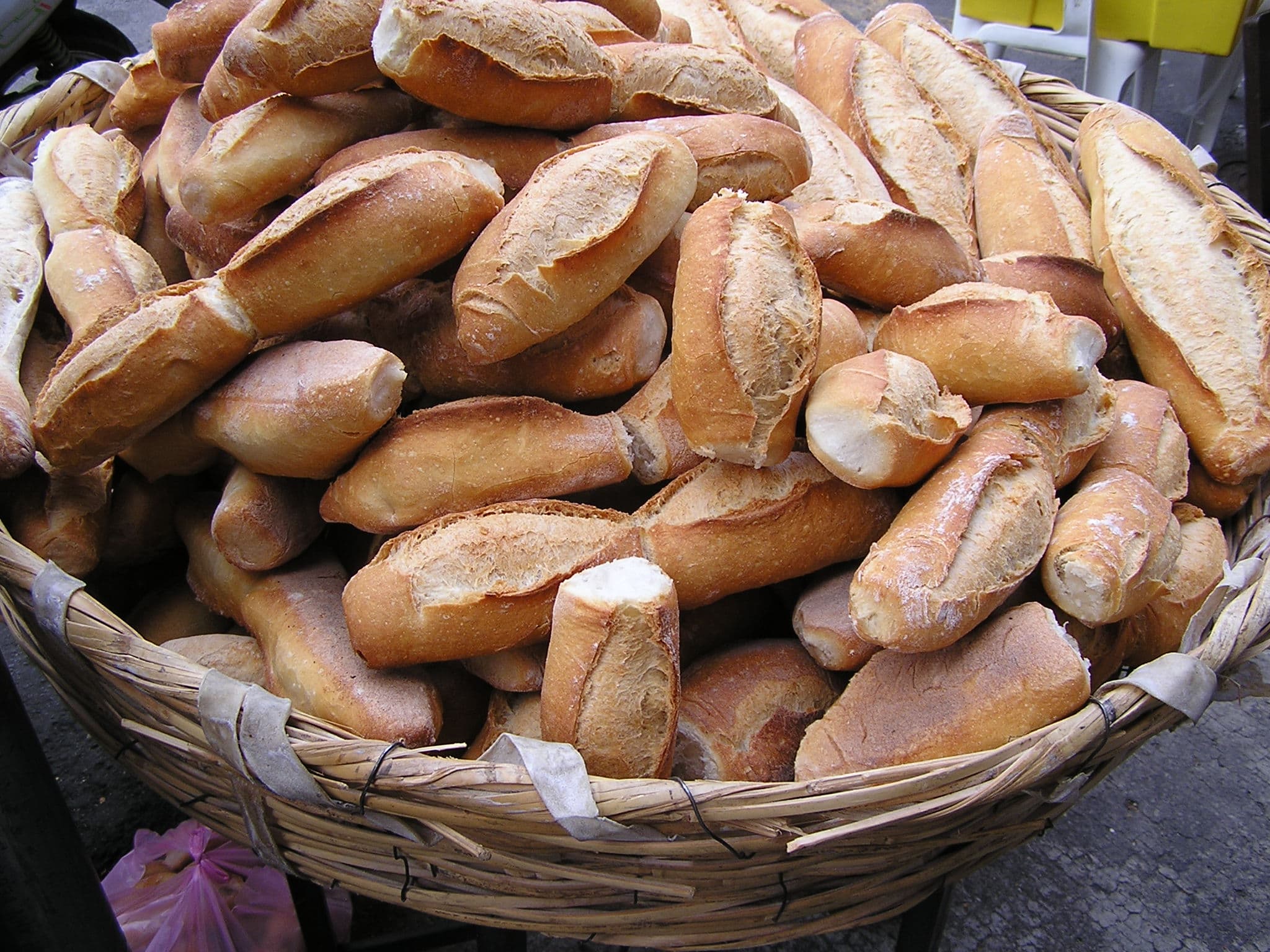
Childhood is a lost homeland made of flavors. Even now, without effort, I can mentally retrace my neighborhood, its streets and blocks. There was a bakery and restaurant called La Veiga. I remember my father eating whatever we children left behind; then we would buy sweet bread and bolillos for the week. I remember the uneven sidewalks in the neighborhood, their cracks, and the roots of trees breaking through the concrete. If I turn onto 2ª Cerrada de Caracci and then turn onto Empresa Street, the smell of coffee still inhabits one of its corners. There was a mill and a roaster there that flooded the space with something announcing a happiness that still remains in the morning ritual of every day. Opening the coffee packet, putting the water over the flame, pouring the liquid, and plunging my nose into the rim of the cup contain the ritual necessary to turn me into who I am each morning. It is not that I remember that coffee shop every day, but the discovery of that smell is a pleasure that still remains, that transcends me. We are the smell in memory, the taste of the dishes that made us grow, and also the landscape of childhood.
Chef José Andrés says that the first notion of connection we have with another person is through food. Breastfeeding and being breastfed is an act that allows us to survive, but also connects our nervous system with our mother’s. Without a doubt, it is the most powerful of all possible bonds. Human relationships are a neural connection governed by emotions, which are then managed wirelessly. When my daughter Olivia was a little older, she would come into the kitchen and say to her mother: I come in peace and I’m hungry. Words, like ingredients, reinvent themselves in an alphabet soup. Food makes us lower our weapons and lights up our eyes.
But in a world where pizza arrives faster than the police, the food race now translates into a framework in which cooking ceases to be creation and connection. Eating at a fast-food restaurant is a quasi-ritual in which one queues, orders, and has four minutes to swallow the same dish at the 36,000 McDonald’s restaurants around the world, spread across more than 100 nations. But when it comes to eating with one’s hands, the pace changes when that food is not wrapped in advertisers’ gloves. One need only think of nature’s utensils: mussel shells, the injera used to wrap Ethiopian food, the grape leaves of Lebanese cuisine, Korean food, which uses lettuce leaves as edible plates, the tortilla in tacos, which connects corn with the other elements of nature, seaweed paste in sushi, and fruit—all fruit, whose smell can carry us to some point in childhood. Let us think of the most perfect and sustainable wrapping of all: the banana peel. Your nose has just landed on that peel, and perhaps you laugh or slip on that memory. If biological identity is a game of freedom, memory is a landscape where food is the sky of identities. The evocative power of shared dishes tears down every border because it takes us back to the most basic part of ourselves. It is in food that identities build their kindest bridge. That is why it is no surprise that the cultures with the greatest prestige in the world, the oldest ones and those that exert the greatest influence on other cultures, are sustained by cuisine. The states that understand this best do not base their national sovereignty on borders but on their gastronomy.
I am reminded of a project by the artist Elisenda Estrems that helped migrants traumatized by confinement in deportation centers and by the psychological abuse inflicted by U.S. immigration authorities. When deportees crossed the border from Laredo to Nuevo Laredo, a team of volunteers awaited them on the other side. Upon receiving them, the volunteers proposed an exercise. The process of transformation then began, moving from negation toward personhood. Negation began when they left home, continued as the traces of the desert were erased and any identification that might reveal their origins was destroyed, thereby erasing their names, ages, and nationalities. The act of annulling oneself was perpetuated when the stolen destiny became an irreversible fact, precisely when immigration agents and their police officers arrested them and assigned them a file. Reduced to numbers, carrying accumulated stress and the frustration of not reaching the promised paradise, apples and all, but also paralyzed in a limbo that offered no guarantee of returning home, the nameless had neither Troy to fight for nor Ithaca—or any other town—to return to, to whatever they might call home and hearth. There, paralyzed, tongues tied and emotionally devastated, they were invited to sit at a table. Elisenda’s team then asked them to write their names on a piece of paper. From that moment on, the questionnaire became a vehicle that led them to think about their own cultural origins. When their breathing indicated calm, the final question came: What did your mother feed you when you were a child? At that moment, the eyes of the silenced filled with tears, and then the knots in their tongues came undone. Facing the plate that brought them back to their origins—roast chicken, beans, broths—the conversation continued as they gathered up the pieces of their shattered lives. Remembering who one is is possible only through the root that connects us to the origin of identity, both our own and our shared identity. In the end, the recovered migrants tore an apple into pieces, or ate grapes, or peeled bananas. The space between memory, the five senses, childhood, and the construction of the we or the self is viable only thanks to the possibilities offered by resemblance—that resemblance marked by wounds and nuances, untouched by the plastic wrapping, mass production, reproduction, and copying that characterize pop culture and that rarely connect with the grace of imperfection. Indeed, diversity lies in error, in the nicks of hand-carved wood, in the dish made by ear and intuition, in the art of the common and of community that (as a species) makes us differently equal. Elisenda’s exercise works because identity is the one thing they cannot take away from you, and because that identity connects with something much deeper than that world in love with its image in the mirror of advertising, fast food, and heedless consumption.
Eating is an act in which the profane and the sacred coexist without embarrassment. That is why it is no surprise that food is consecrated at the same table, that dishes not on it are discussed while other things are eaten, and that in the end the act of eating is transmuted into life and death—in other words, into energy and shit.
This morning, while drinking coffee, I read about the latest invention from the Israeli company Steakholders, which aims to “revolutionize the way we produce and consume food… accessible to everyone.” Printing lab-processed food in 3D is already a reality. When digital life makes it possible to mass-produce such food, and the menu of steaks that emulate fish and meat becomes a reality of industrialized proteins, our species will have solved the problem of hunger, but it will also have handed its table over to a digital life of binary food, unimaginative and as insipid as a mouthful of talcum powder. When the aesthetics of printed food have reached their peak, we will eat delicious dishes made in the image and likeness of the original idea. Plato, who considered cooking a lesser art, will once again be a Plato reloaded.
The principle “I think, therefore I am” is surpassed by this truth: “I eat, and that is why I am.” In the same way, the chicken-and-egg dilemma is the dilemma of our identity. We are what there is, says Manolín the King of Salsa. We are what is sold like hotcakes. Are we what we eat, or do we eat what we are? If our species has replaced nature’s skin with synthetic skin, and food is made of plastic and dressed in wrappers, bottles, lids, and plastic containers that adorn it, and if, moreover, we have abandoned nature in order to eat as much industrial food as possible, that means homo faber has become homo wraper. As we turn planet Earth into a planet wrapped as a gift for an elastic God, we feed ourselves with what is available, with what is sold in the market—and what is available is what we are.
You want everything peeled and put in your mouth, as the saying goes. Urban tribes disparage people who live in the countryside. The farmer is ignorant in the eyes of homo wraper, even though homo wraper has not the slightest idea of the process that turns a handful of cacao beans into the chocolate he puts in his mouth. The reason is simple: homo wraper is dependent on the state, the market, and the entire production chain that spares him the effort of growing food at home. Just as sayings become clichés, species and seasonings eventually become banalities. The 4.4 million square kilometers occupied by all the world’s urbanized areas (3 percent of the planet’s 148 million square kilometers of land surface) could also be areas for cultivation, urban gardens, and vertical farms, providing the inhabitants of each neighborhood with spices, fruit, or vegetables. Yet consumer society and the speed of those of us who live in linear time turn us into people incapable of understanding the origins of the species, sauces, animals, milk, and coffee we consume at top speed. And we still disparage those responsible for producing them, while a long carbon footprint takes shape behind us.
Let us talk about slowness and the road. Food culture contains the synthesis of life in community, unless you are a hermit devoted to agriculture, hunting, or fishing. Tradition is a formula that explains cultures and their unfolding. Time and distance come together in a single dish. It is the sum of knowledge transmitted by ancestors from generation to generation; it is the meeting of multiple travelers who gather at a single point when ingredients are mixed; and it is also the result of the inevitable cultural mestizaje of which we are a part.
I love the term “smoke cuisine.” The contribution of food culture to the other arts is beyond comparison. The art of cooking has shaped poetry and all literature; it is present in painting, music, and film. Throughout history, it has been essential to defining philosophical concepts and has been the principal stage on which revolutions, independences, social movements, and all kinds of conspiracies are forged.
Cooking is also the art of error and contradiction. Take tarte Tatin, for example, whose mystery—the reasons for placing the pastry over the apples—remains unsolved, or Thai food, which has found its signature in the contradiction of mixing sweet and spicy flavors. Now, if we want to see how global phenomena brought the world of flavor closer to the world of knowledge, let us think of the pandemic. If anything began to cook during that confinement, it was the Flourishing announced in this book. There is no better example than food to show how something chopped into pieces, passed through a knife, and stirred over a fire can deceive the senses into making us believe the result will be a failure, when deep in the pot, a miracle is being prepared.
There are dishes of synthesis, such as mole poblano, a product of pre-Columbian Indigenous gastronomy mixed with convent cuisine, and there are also dishes that, like ideas, spread throughout the world. Think of the way the turkey (named by the Spaniards, who associated it with the peacock) or guajolote (a Nahuatl word meaning “great monster”) left the American continent to spread through the world’s kitchens, where it eventually came to be called “turkey” because, when Europeans reached the Americas, they confused it with the guinea fowl that arrived in Europe by way of Turkey. The fact is that something domesticated a thousand years before Christ and associated with the god Tezcatlipoca ended up becoming the main dish of Thanksgiving in the United States and the food with which Christmas is celebrated in many countries around the world.
Francesca Riggoti, author of a beautiful book reflecting on philosophy in the kitchen, says that cooking is as old as the art of thinking and that, although the two activities may seem unrelated, in reality they nourish each other. Never has that been more aptly put. Here, a term related to food is used to say that the affinity between the making of food and the making of thought practiced by philosophy has kept these activities in separate compartments—the desk and the stove, the study and the kitchen—owing, among other things, to the difference in sex between those who practice the first and those who practice the second. “The kitchen is the quintessentially female sphere, although with important incursions by male elements, especially at the upper end of its offerings—the sacrificial kitchen and haute cuisine—; philosophy is a purely male territory, despite some significant incursions by female elements, always few and discontinuous.” However, the relationship in this story seems to be changing. When men learn to move through the private sphere, as women are doing in the public sphere, knowledge and flavor will leave their rigid territories and return to a place of common encounter. That, too, will be the flourishing.
The matriarchy to which we can aspire would recognize that the world’s cuisine neither strains concrete nor makes grids, neither subtracts ingredients nor separates; it mixes. The world to come is not being cooked in a microwave oven, nor does it resemble the Pantone 116C cheeseburgers shared at the table by members of corporate fascism, which, after the pandemic and the retreat of the feminist movement, has unleashed all its horsemen. What is flexible does not break, and while the businessmen who finance election campaigns, the businessmen turned politicians, and the businessmen attempting to erect a digital power that would subjugate the press (once called the fourth estate) and bring the separation of powers sustaining most democracies under its control carry on, elsewhere, and over a slow fire, a world that prefers the speed of a casserole dish is cooking.
To conspire means to breathe together. It is away from public life and digital life that the best practices are taking place, where the raw and the cooked—that is, the pragmatic and the things we think—are building a new reality that will emerge after the final convulsions of the Leviathan, also known as Sauron’s eye or the patriarchate that devours people and Pantone cheeseburgers. As happened in waves in the convents of mystics such as Sor Juana, Hildegard, and Julian of Norwich, in the future to come it will not matter who thinks and who feeds. The philosophy of the future will be an exercise in connecting nature and knowledge, but also a return to the slow pleasure of baking bread, extracting salt, or curing a barrel. It will be the return of a global bonfire, where the knives of death recover their culinary function.
In the beginning was the Word, and the Word arose from the mouth and the tongue. It has been said that the beginning of civilization lies in our capacity to live together, that we domesticated ourselves when we learned to control fire, that art began with cave paintings, and that the proof of a solidaristic species is a thousand-year-old bone whose fracture was able to heal thanks to rest. The truth is that, before all that, the tongue came first: that fantastic organ capable of perceiving flavors, producing pleasure, and connecting us with others through the word, which is linked to the brain, or through the kiss as a prologue that later extends into the emotions of the skin. The tongue is the guardian of that cave called the mouth, which leads us into the abyss of the body. Everything that allows us to be human is concentrated in a hybrid organ used for eating, spitting, expelling unwanted objects and food, recognizing symptoms, cleaning, licking, perceiving flavors and temperature, and expressing ourselves not only through words and languages but also through certain gestures. The tongue insults and tastes. The tongue and mouth are our species’ stronghold, just as smell and hearing make dogs special. That is why we live together so much, hunt together, and lend one another our senses, although that is another story.
The tongue makes us human, and with it we direct the laboratory of invention. We are still very far from an algorithm-powered plunger being able to experience the capacities of that organ, which brings the sense of taste and touch together with the other organs that assist us when we eat. Listen to the sound of water in all its forms until you pour yourself a cup of coffee; listen to oil boiling and fire crackling; stop in front of a pastry shop and look; go inside and seek out the smell of freshly baked bread. If it is summer, think of the smell of guava or mango.
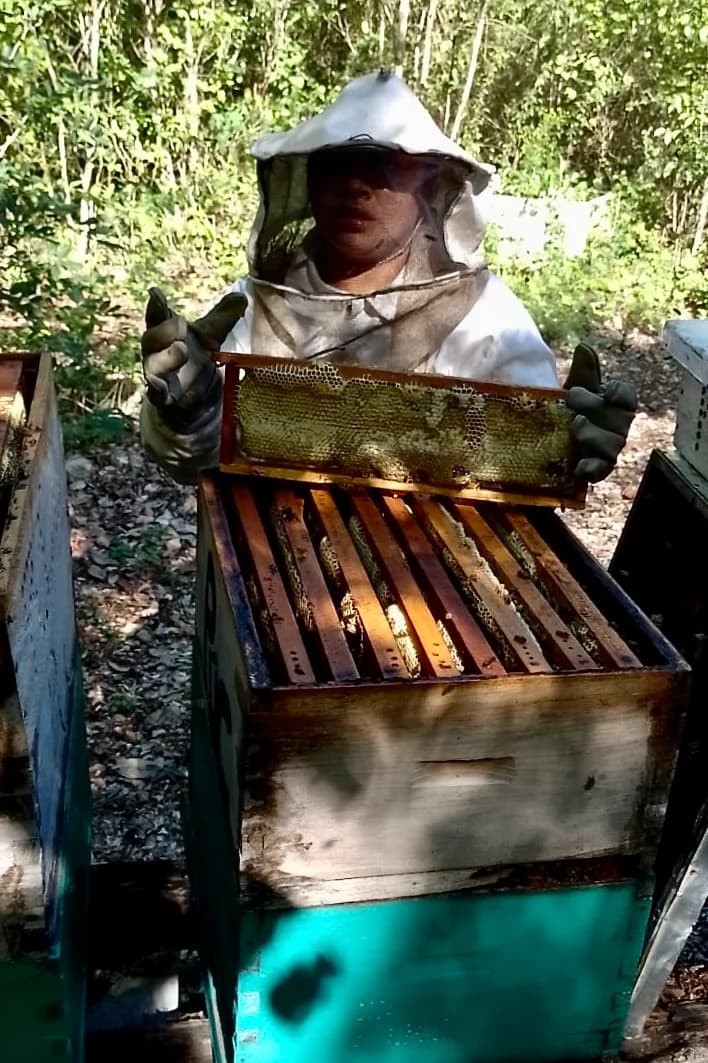
We learned to domesticate the world to satisfy hunger. In bees we recognized the sweet pleasure of slowness, but also of what is stolen. We took possession of the sea’s salt, and Gandhi taught us a lesson with it. We invented hearths and kitchens. We learned from plants through many sacrifices and then passed their secrets from mouth to mouth. We tamed the earth and the sea, made grafts, and fed millions of mouths. The intimate and collective experience that was the pandemic is not a new experience. It is in food that, every day, everything is intimate and collective as well.
So as not to over-season this, I will no longer speak here of gluttony, hunger, or the physical and metaphysical nausea of human existence, because that belongs to other chapters and because I want to leave one fixed idea to savor: In the film Babette’s Feast (1987), a French chef arrives in a strict religious community in Denmark. Fleeing the conflicts in her country, the chef becomes the housekeeper of two sisters whose father had been the community’s pastor. When Babette wins the lottery, instead of returning home she decides to spend the prize on a feast of gratitude for the hospitality she received. What happens next becomes a communion—that is, a way of elevating the human spirit through flavors and fellowship. After witnessing the slow miracle of creation, course by course, and after the feast, Martine, one of the sisters, says to Babette: We have all been told that grace is found in the universe, but in human life it is rare to find it. I have seen it tonight.
Eating is a miracle that has become a habit. Remembering it should be a habit.
Pablo Raphael / Mexico City
This text belongs to the essay The Submerged Cathedral by Pablo Raphael