The first time I stepped into a kitchen was the same way many of us begin our careers: washing dishes.
I watched everything the chef did, and I found his work very interesting. I would hurry to finish the dishes I had to leave clean, then go stand behind the chef, watching the whole time to see what he and the other cooks were doing. Until my coworkers noticed and told me, “Come on, help us chop vegetables.”
A month later, they took me off dishwashing and I started as a kitchen assistant, and that’s how it all began. At first I made breakfasts, but I always wanted to know more. Once I had learned the menu at one place, I felt it was too small for me, so I would move on to a new hotel or restaurant. Many times I worked double shifts without being paid because I wanted to learn. That was my school—working, let’s say, “for free.” The rewards came later.
I started at 15. By 18, as a cook, I was given the responsibility of running a restaurant, and that’s how I’ve continued, always looking to be in the best places. When my first child was born, I went to work on a yellowfin tuna fishing trip, and that was something completely different. Entering a kitchen where everything is constantly moving and nothing is the same as in an established kitchen on land—everything becomes more complicated, everything. I entered a new world.
What I most like to cook is seafood, as well as Mediterranean and Italian cuisine. When I was little, my mother had a taco shop, and I helped her grill the meat. In a way, she was my first teacher—my mother—and she has such an incredible touch with seasoning. Her ceviches were among the best! The family ceviche recipe, you know—everyone has a family ceviche recipe from their mother or grandmother that continues to be passed down from generation to generation.
When we’re about to start a hot stew, if we have onion and garlic, we’re on the right track. Then come the lime, olive oil, tomato, tomatillo, avocado—our Mexican recipes. From Colima, my favorite dishes are pozole, Colima-style ceviche, and other very delicious dishes. I’m from Manzanillo.
I arrived in La Paz in 2010, when I started working in the yachting industry. I thought the sea was spectacular and brought my family here on vacation; they didn’t want to leave. We didn’t plan to move back—we’re doing very well here. Always looking to grow, I started a Baja-style taco business, and I think we’re on the right track.
The biggest challenge is respecting the sea—that’s everything. Taking care of the fish’s reproductive cycles. Here in La Paz, closed seasons are carefully observed, and people are very strict about that. That’s the only way we’re going to preserve the species found in these seas.
What reproduces most naturally here is the clam, since the climate is ideal for it because of the currents in the Gulf of California. There’s also king kampachi in San Juan de la Costa, as well as yellowtail, yellowfin tuna, and in some places tuna is also being farmed. The native species here is the clam. Others, such as marlin and dorado, are migratory species that arrive seasonally. SEMARNAT makes sure there isn’t overfishing, and that is essential to preserving many species.
I really enjoy being able to show all my affection through what I prepare with my hands when I feed people. And at the same time, by doing this, I provide for my children and my family.
For me, this is the best profession.
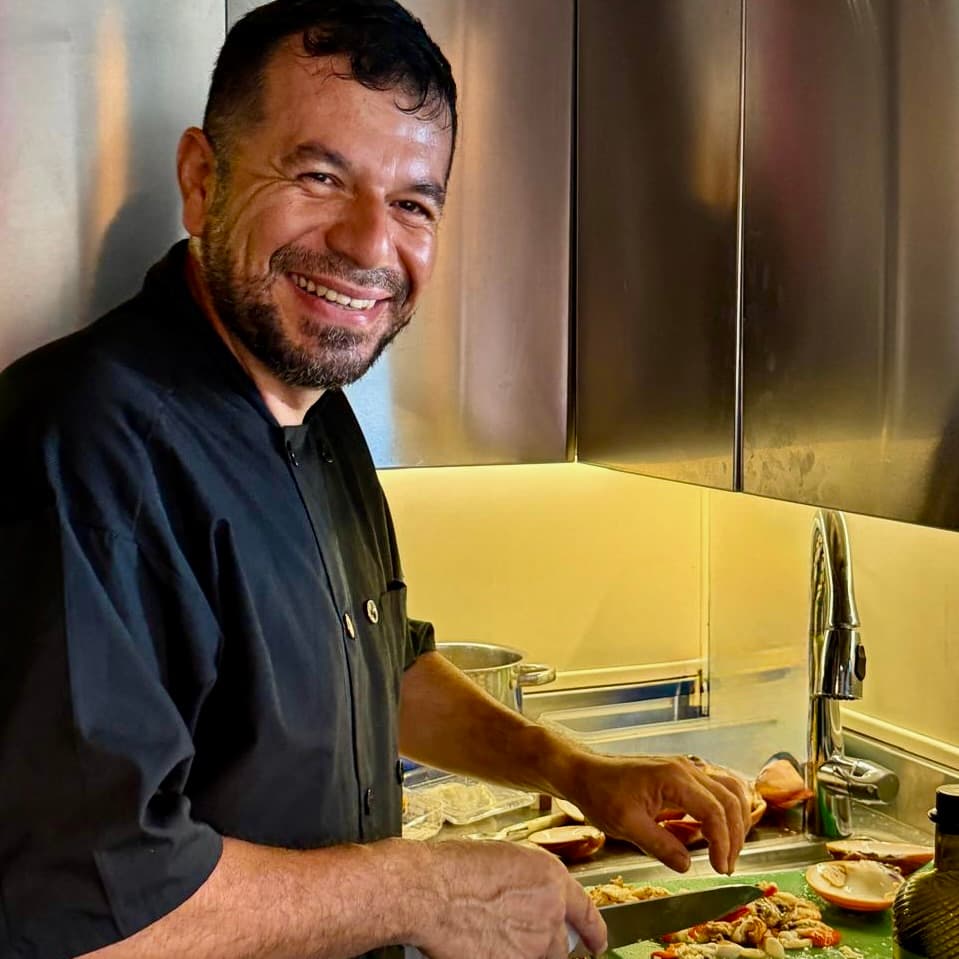
Mario Ortíz / Manzanillo, Colima