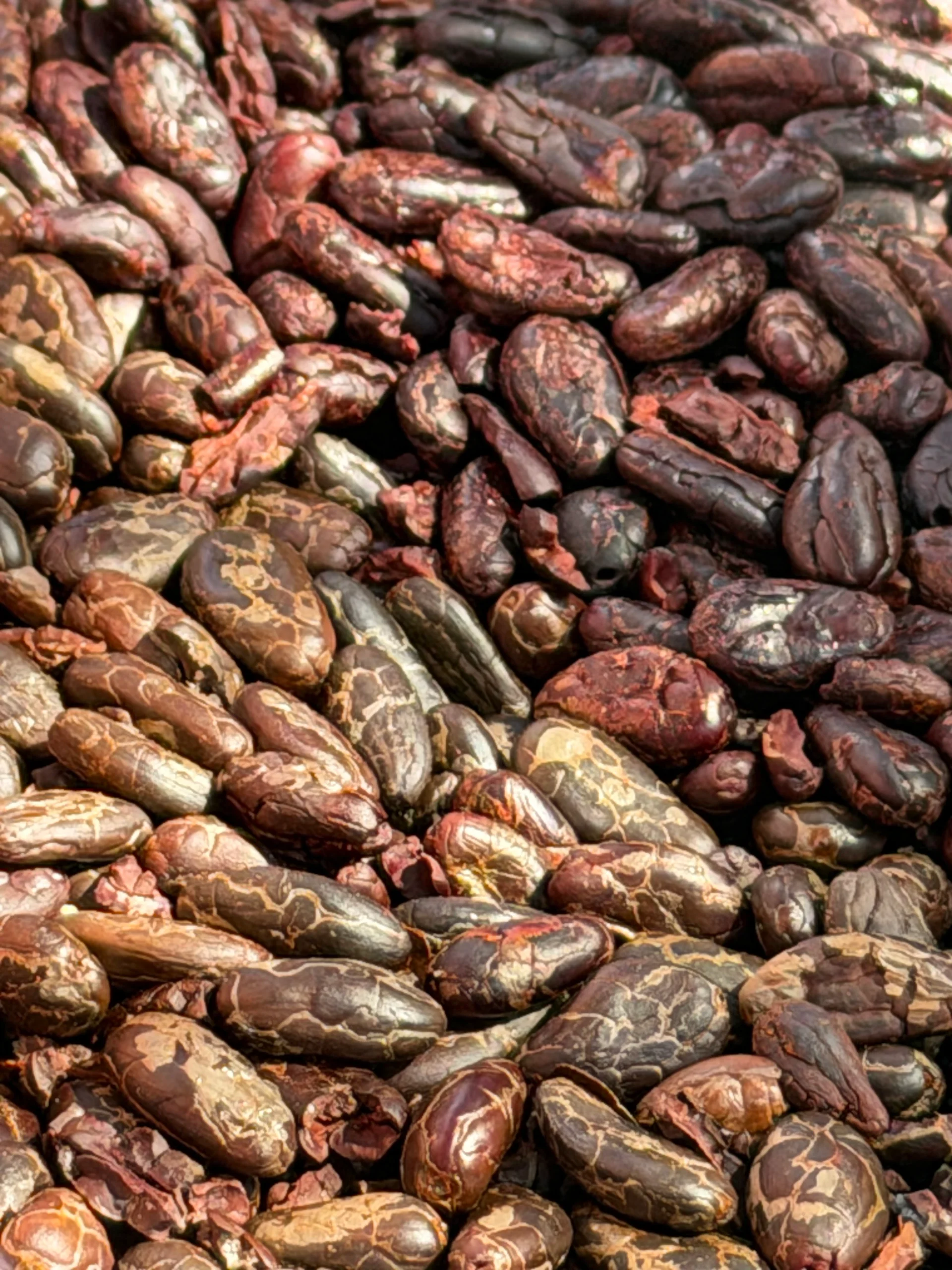
In the land we now call Mexico, foods were cultivated that millions of people around the world eat without quite knowing where they come from — and even here, many people are unfamiliar with, for example, pataxtle, cacao's lesser-known sibling, also called white cacao. Corn, beans, quelites, chia, vanilla, sweet potato, chayote, nopal, achiote, peanuts, guava, prickly pear, maguey, soursop, cacao, amaranth, chile, squash, avocado, tomato, and so many others were born from this land — cultivated by hands that learned to listen to the rhythms of rain and sun, by peoples who developed sophisticated farming techniques centuries before Western science ever turned its gaze toward them.
When Europeans arrived on our continent, they encountered plants they had never seen before, carried them off to grow in other soils, and in doing so forever transformed the history of how the world eats. The Indigenous peoples of Mexico did not simply discover these plants in the wild: they domesticated them, improved them, crossbred them, and selected their finest seeds season after season.
The corn we know today does not exist in the wild; it is entirely a human creation — one of the most complex achievements in the history of world agriculture. Corn could not exist without human beings, and it stands as one of the most profound examples of the relationship between a plant and a civilization.
The milpa is no accident — it is accumulated observation spanning centuries, a form of agronomy that needed no laboratory because it had something more valuable: time, attention, and entire generations devoted to understanding how life behaves beneath the soil. What is called innovation today, Indigenous peoples knew millennia ago.
Every native seed is an archive that holds within it the memory of every cycle that came before: the rains that fell, the droughts that were survived, the hands that chose which grains to keep for the next planting. Heirloom seeds are living organisms that have adapted to a specific place over centuries. They do not only produce food — they tell the story of the landscape, the climate, and the culture of those who cultivated them.
When a native variety disappears, it is not only a plant that is lost. It is knowledge that took centuries to build and can never be recovered. Mexico is currently home to more than 64 races of native corn, each with its own characteristics: color, texture, ripening time, resilience, flavor. Our genetic heritage is among the richest in the world.
To save a seed is to save a way of life. When we stop planting a crop, we erase the memory of those who planted it before us.
There are things that existed before they were ever named — and that today not only have names and surnames, but have traveled long roads to new soils, filling the whole Earth. These are our seeds from Mexico.