Corn, an ancestral heritage
from Mexico to the world
Mercedes López MartínezJuly 31, 20264 min read
For Mexico, it is an everyday practice — and therefore one so often rendered invisible — to eat, pay homage, be part of our blood, muscles, and skeletal system, culture, traditions, and cosmogony, and to live in closeness with the marvelous native corns and their integral system of reproduction: the milpa.
The Popol Vuh, the sacred book of the K'iche' Maya, tells us how, after several failed attempts, the peoples of Mesoamerica succeeded in shaping grateful human beings, bound to the land and its agricultural cycles — women and men who pay tribute to our ancestral gods and goddesses, and who for centuries have maintained the tradition of sowing, reproducing, and defending, through biodiversity, the milpa and the 64 races of native corns.
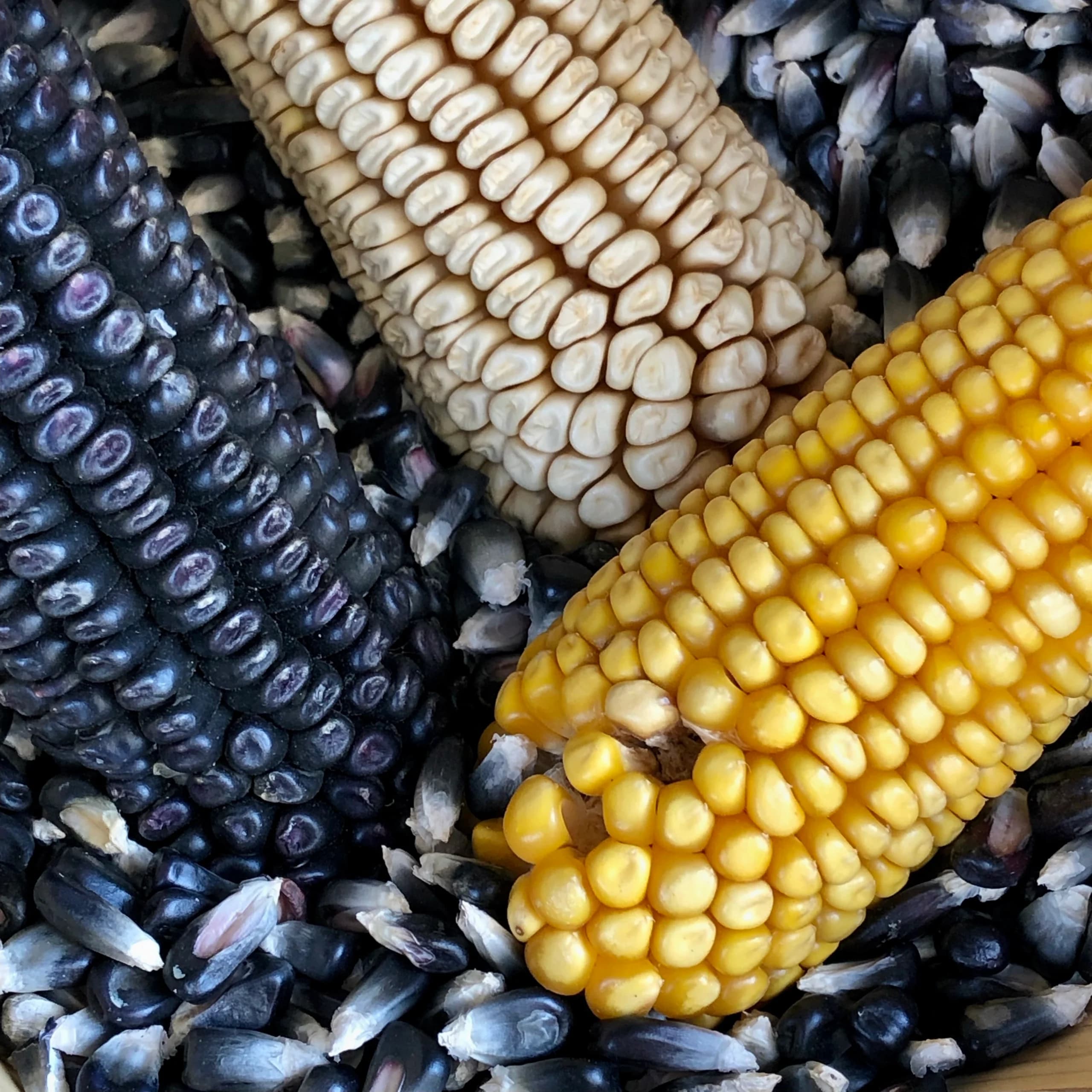
Corns perfectly represent the Mesoamerican and native communities of northern United States and southern Latin America — communities divided by artificial borders — which developed more than 60 races and thousands of varieties of corns in every color, flavor, and culinary and medicinal use. These have been the foundation of a local, healthy, and varied diet that is now being lost to the imposition of ultra-processed foods and beverages that followed the North American Free Trade Agreement in the nineteen-nineties.
It is important to note that milpa systems — which number in the thousands across the regions mentioned above — do not only produce corn; they also produce tomatoes, chiles, beans, squash, chayotes, quelites (a range of nutritious greens that vary by region, such as epazote, pápalo quelite, chaya, purslane, huauzontles, and others), and medicinal herbs. All of these formed the basis of a healthy diet that is now being lost to an industrial agriculture model that produces chemical-laden monocrops for export.
In Mexico, we must highlight the collective lawsuit against genetically modified corn — a civil action that for 13 years has ethically, profoundly, and committedly halted the planting of genetically modified corns at the very center of origin and diversification of corn.
Had we not filed that lawsuit 13 years ago, Bayer-Monsanto, Dow Agrosciences, and Chem China would have already planted and contaminated the vast genetic biodiversity of Mexican corns with their GM seeds.
Imagine the consequences had we not brought that lawsuit. There would be no elotes or esquites sold on street corners in every neighborhood, community, and public space in the country — topped with chile, mayonnaise, salt, and lime. Gone too would be our wide variety of atoles, tamales, sopes, traditional dishes, drinks, and foods that have earned Mexico UNESCO recognition for its corn-based cuisine and its cultural traditions.
I do not want to imagine a day without tortillas, atoles, tlayudas, bocoles, gorditas, empapatadas, popcorn, and thousands of other traditional dishes and drinks — lost to the greed of voracious companies that seek only profit, with no regard for food sovereignty, biodiversity, or culture.
As consumers, it is essential that we shop at tianguis, local markets, and traditional cooperatives; that we talk with the marchanta or marchante; that we ask where products come from; that we pay a fair price for native, traditional, chemical-free, quality foods. Above all, we must defend the tradition of hundreds of generations of women and men from traditional peoples, peasant communities, and consumer and environmental advocacy groups who want to keep protecting our free seeds, our healthy, local, agro-chemical-free food, and an ancestral food tradition that is being eroded by the onslaught of supermarkets, self-service chains, and large corporations that seek only to appropriate common goods — seeds, water, food, land, and biodiversity — which in Mexico are embodied by the milpas, the peasant women and men, and all of us who are defending that cultural, gastronomic, and environmental wealth.
Dr. Mercedes López Martínez / Mexico City
Common Representative of the Collective Corn Lawsuit
Vía Orgánica AC