Chileatole is a sacred drink to me.
It is the first drink we prepare with the new corn that Mother Earth and God have given us for our lives. We enjoy it once the first harvest has been gathered in the fields and we have the first ears of corn, some tender and others already mature.
The day before, we go to the fields to gather the ears of corn. When we get home, we remove the husks, and the tender ears are put on to cook all night, until the kernels open up. The water in which they were cooked is then used to prepare the atole.
Very early in the morning, some of the women come over. We remove the kernels from the mature ears and grind them very well, making ten or twelve passes over the metate. The masa is thinned with the water in which the ears of corn were cooked, strained through cheesecloth or a cloth napkin, and placed over the heat. It is seasoned with epazote, fresh or dried chile paradito, salt, panela (or sugar), and cinnamon.
Once it is ready, the tender ears of corn are placed in the center of the table and the whole family is called. Each person is served a cup of chileatole and can take whichever ear of corn they like to dip into it. So, amid laughter and conversation, we enjoy the first harvest of tender corn. To me, it is a ritual and sacred drink. It is a drink that belongs to us, the Indigenous peoples.
Panela is the name used for piloncillo in different regions of Oaxaca; piloncillo is a sweetener made from sugarcane juice.
Chile paradito is a variety of chile from Oaxaca’s Central Valleys.
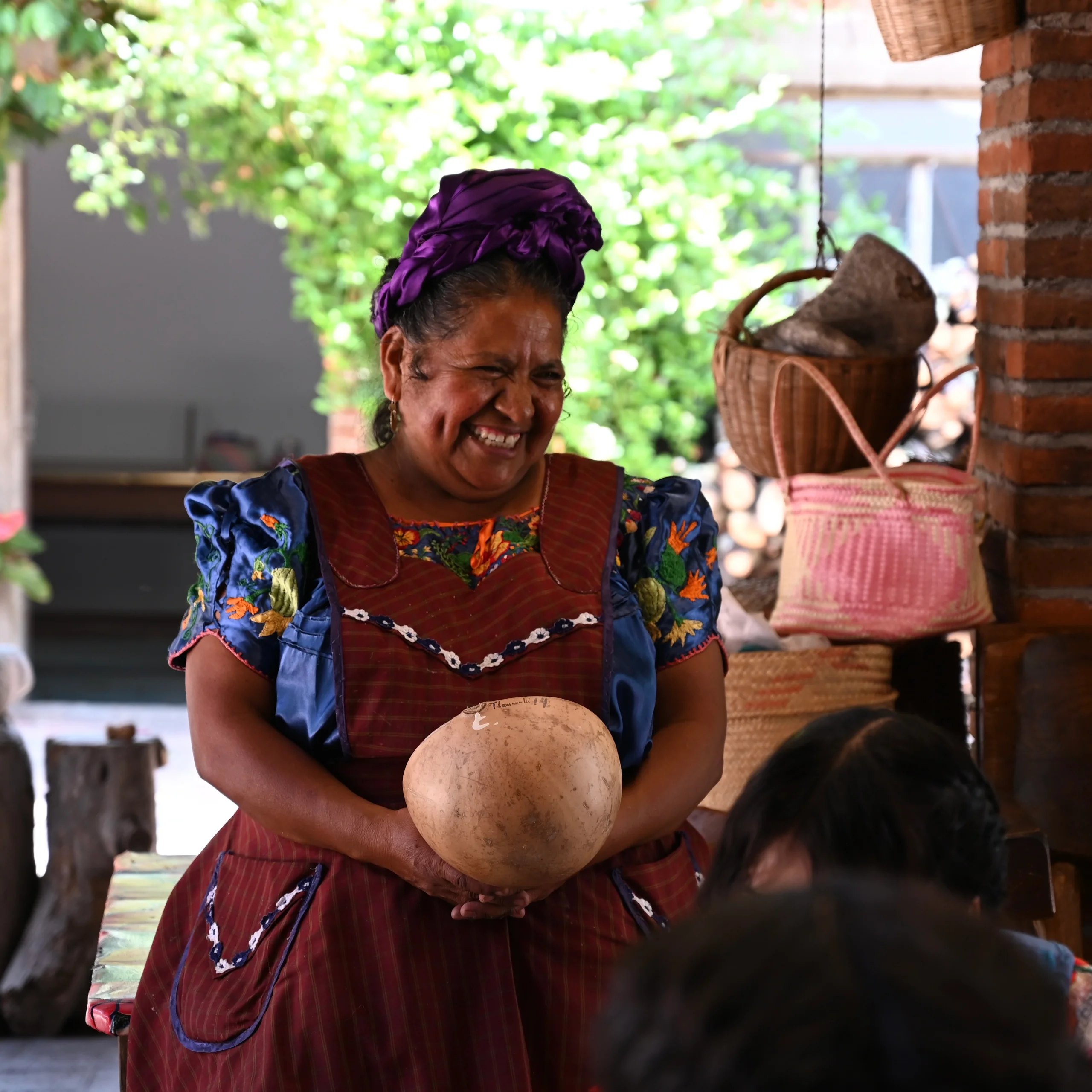
Abigail Mendoza Ruiz / Teotitlán del Valle, Oaxaca / Zapotec Culture